
Quick Answer: There are four main interior door styles to choose from, and the right one comes down to budget and finish goals. MDF and molded doors cost less and resist warping, making them the standard choice for builder-grade projects. Flat panel and solid wood doors cost more but bring a premium look and feel to higher-end remodels, with solid wood offering the most natural finish of the four.
What Types of Interior Doors Are Available?
Most interior doors fall into four categories: Primed, molded, flat panel shaker, and solid wood. Solid wood covers a range of design styles too, including Shaker and French doors, covered in the FAQ section below. Construction drives everything else — price, weight, finish, and how well the door holds up over time.
Builders on cost-sensitive projects often reach for MDF or molded doors, while homeowners chasing a specific look tend to land on flat panel or solid wood. T.M. Cobb stocks all four, plus the hardware and frames to match.
Quick Terms to Know
- Stile: The vertical outer edges of a door’s frame.
- Rail: The horizontal pieces connecting the stiles at the top, bottom, and sometimes the middle.
- Core: The interior structure of the door (solid, hollow, or composite) that determines its weight and durability.
- Veneer: A thin layer of real wood applied over an engineered core for a natural look at a lower cost than solid wood.
- STC (Sound Transmission Class): A rating that measures how well a door blocks sound between rooms; higher numbers mean better sound control.
What Is an MDF Interior Door?
An MDF interior door is built from medium-density fiberboard, an engineered wood product made by pressing wood fibers with resin under heat.
MDF has no grain, so it takes paint evenly and holds a smooth, factory-quality finish with no sanding required. That makes it the volume workhorse for builder-grade projects, where dealers need consistent quality across dozens of doors and where cost per opening matters.
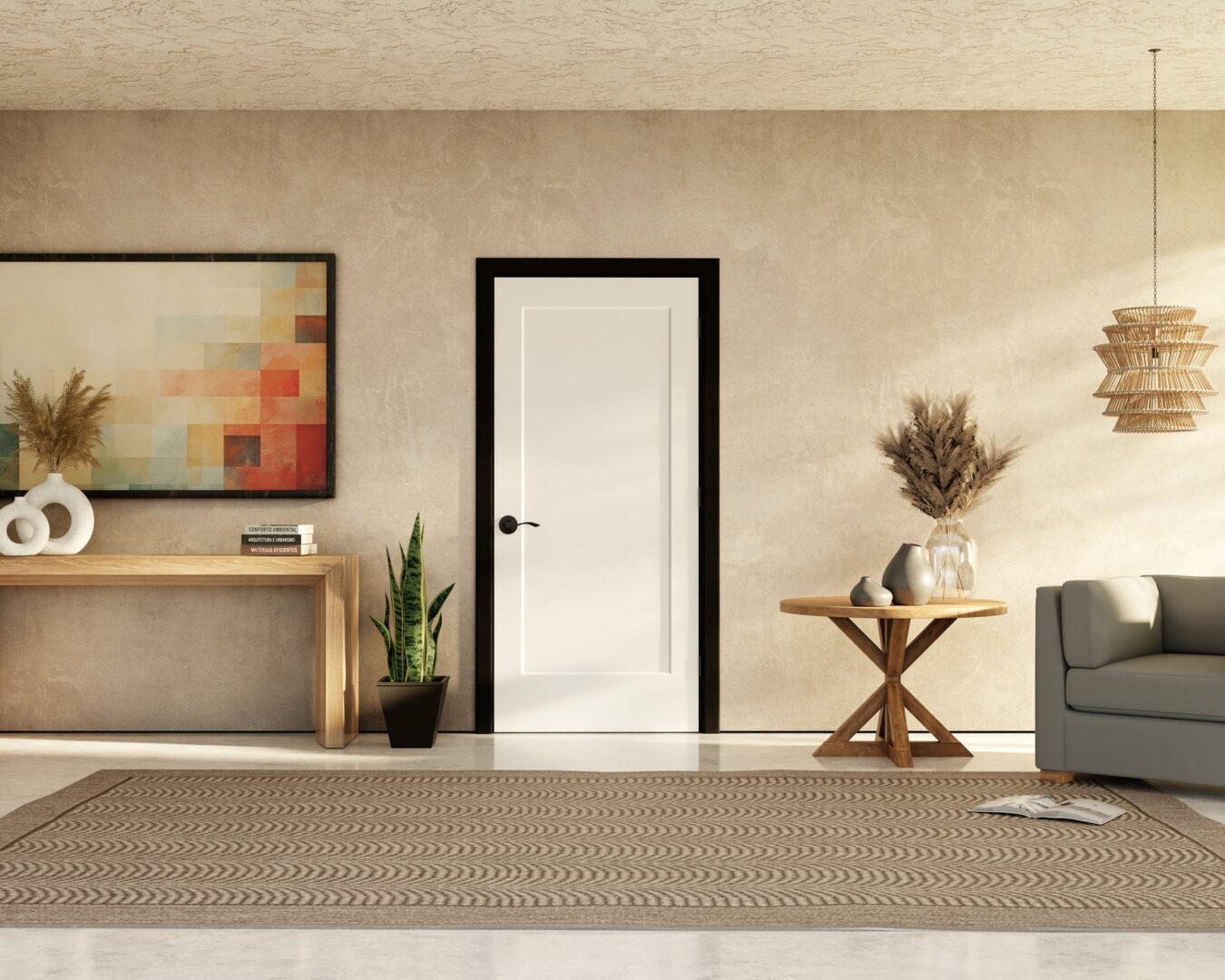
Paint-grade MDF runs less than solid wood or premium veneer, though it won’t show natural grain variation.
Are MDF Doors Durable Enough for High-Traffic Areas?
Yes, MDF doors are resilient as long as they’re properly primed and painted. MDF’s engineered core resists the warping and cracking solid wood can develop over time, which is why it holds up in hallways, closets, and other high-traffic spots.
The one thing it won’t tolerate is direct water exposure, like a bathroom space. For those types of areas, choose a moisture-resistant core or a molded door instead.
What Are Molded Doors, and How Do They Compare to Solid Wood?
A molded door pairs a composite or hollow core with a pressed, wood-fiber skin shaped to look like a traditional panel design. Solid wood doors, by contrast, are built from actual wood stiles and rails, jointed together panel by panel.
Molded doors cost less, resist warping better, and paint cleanly, which is why they show up so often on builder-grade jobs. Solid wood costs more, but it delivers a natural finish molded construction can’t replicate — more on that trade-off below.
Insider tip: Builders on spec-built and high-volume projects often standardize on molded doors specifically to manage warranty risk. Consistent manufacturing means fewer finish or warping-related callbacks compared with lower-grade options.
What Is a Flat Panel Door, and Where Does It Perform Best?
A flat panel door skips traditional raised molding for a smooth, single-plane face, giving it the clean, modern look that’s become a go-to in contemporary remodels.
“Flat panel” describes a look rather than a single material, so these doors come in multiple core options, from MDF to solid wood, and price and durability shift depending on which one you spec. That flexibility makes it a strong fit for higher-end remodels, where the homeowner wants a specific look without sacrificing performance.
What About Solid Wood and Panel Doors?
Solid wood doors, sometimes called panel or stile-and-rail doors, are built from real wood joined into a frame around one or more panels, rather than an engineered core with a pressed skin.
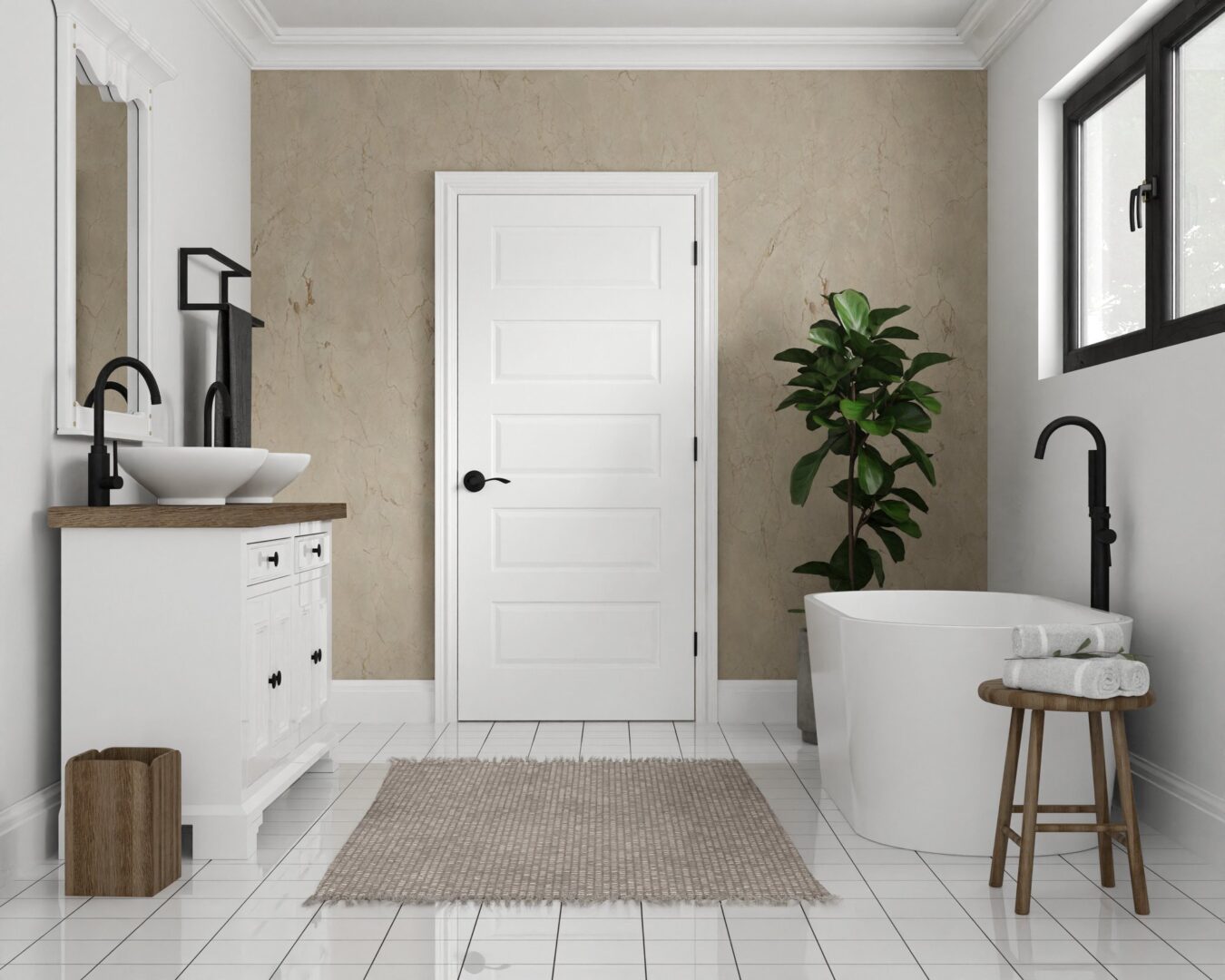
That construction is where solid wood earns its premium: natural grain, a stain-grade finish, and a weight that reads as high-end. It’s the right call for statement rooms and design-forward remodels where look and feel matter.
The trade-off is humidity sensitivity. Solid wood’s moisture content shifts with the seasons, moving from about 6.9 percent at typical indoor comfort levels (70°F, 35 percent relative humidity) to roughly 15.7 percent in humid summer conditions (80°F, 80 percent relative humidity).
That swing drives warping and cracked joints over time, so solid wood performs best in a stable, climate-controlled space.
What Other Interior Door Styles Does T.M. Cobb Offer?
Beyond the four core styles above, T.M. Cobb stocks several specialty options built for specific rooms or design goals.
Shaker Doors
Known for their flat, recessed panels and clean-lined profile, Shaker doors are a favorite whenever a project calls for a warm, updated look. You’ll see them most often carried through an entire home for a cohesive feel, especially in modern farmhouse and transitional-style builds.
French Doors
A pair of glass-paneled doors that open together, French doors bring in natural light and a classic, refined look, while still letting you close off the room when privacy is needed. They’re a popular pick for linking living rooms to home offices, dining rooms, or spaces that open to the great outdoors.
Acoustical (STC) Doors
Built for rooms where noise control matters as much as looks, these doors carry sound-transmission ratings up to STC 47. You’ll find them most often in apartment buildings, shared office suites, and home theaters or music rooms, where keeping sound contained is part of the spec.
Insider tip: Multi-family and office buildouts often need sound-rated doors between units or suites, even when it’s not called out on the plans. If your project falls into either category, it’s worth asking your rep about acoustical options before you finalize your order.
Mirror and Pantry Doors
Mirror doors pair a safety-rated mirror panel with a fir door frame, a practical choice for bedroom and hallway closets. Pantry doors use a raised-panel design, with an optional glass insert if you want visibility into kitchen storage without opening the door.
How to Choose the Right Interior Door Style
Three questions can help narrow down your decision.
Room Type
Bedrooms, closets, and hallways handle almost any style. Bathrooms and laundry rooms call for moisture-tolerant MDF or molded doors. Living rooms and entries, where the door is part of the design, are where flat panel and solid wood earn their keep.
Budget
Builder-grade or high-volume projects favor MDF and molded doors for consistent quality at a lower cost per opening. Higher-end remodels can absorb flat panel or solid wood.
Moisture Exposure
Anywhere humidity swings — bathrooms, laundry rooms, homes without steady climate control — favor an engineered core over solid wood.
| Style | Best For | Price | Durability | Finish |
|---|---|---|---|---|
| MDF | Builder-grade, high-traffic areas | $$$ | High when painted | Paint-grade only |
| Molded | Builder-grade, volume projects | $ | High | Paint-grade, limited stain options |
| Flat Panel | Modern, minimalist remodels | $$–$$$ | Varies by core | Paint or stain, depends on spec |
| Solid Wood | High-end, statement rooms | $$$ | Moderate, humidity-sensitive | Stain-grade, natural grain |
Frequently Asked Questions About Interior Door Styles
Can you paint a flat panel door?
Yes. Most flat panel doors, especially those on an MDF or engineered core, are designed for paint-grade finishes. Solid wood flat panel doors can be painted or stained, depending on the species and grain you want to show.
Do molded doors come in different panel styles?
Yes. Molded doors are pressed from a mold, so they’re available in several traditional panel patterns, from one-panel to six-panel, without changing the core construction or price point.
How long do MDF interior doors last?
A properly primed and painted MDF door can last as long as the home itself. Its engineered core resists warping and cracking, provided it stays out of direct water exposure.
What wood species are T.M. Cobb’s solid wood interior doors available in?
T.M. Cobb stocks solid wood doors in Douglas and can custom order red oak, Rift White Oak, cherry, Douglas fir, or African mahogany to match any style in your home. Veneered stiles and rails add stability, and every joint uses exterior-grade glue for long-term durability.
What is a Shaker interior door?
A Shaker door features a simple, recessed panel design with clean lines and minimal detailing, a look that’s stayed popular because it fits almost any home style. T.M. Cobb’s Shaker doors use glue-and-dowel construction with Primed MDF stiles and rails for stability, and they’re available in fir or custom wood species for a matching look throughout the home.
Does T.M. Cobb offer French doors?
Yes. T.M. Cobb French doors come in a range of styles with single-pane or dual-pane glass, and in wood species including oak, maple, cherry, and mahogany. Because they open in pairs, French doors bring more light between rooms while still offering better insulation and noise reduction than a fully open doorway.
Does T.M. Cobb offer doors built for sound control?
Yes. Our Acoustical (STC) doors are engineered specifically to reduce sound transfer, with ratings up to STC 47 and an optional 20-minute fire rating. They’re a different product from the four styles compared here, built for rooms where privacy or noise control is a priority.
Where can I order interior doors from T.M. Cobb?
T.M. Cobb supplies MDF, molded, flat panel, and solid wood doors to dealers, builders, and homeowners across California and the Western U.S. Find your nearest dealer for local stock and pricing.
Find Interior Doors In Stock at T.M. Cobb
Every interior door style covered here — MDF, molded, flat panel, and solid wood — is in stock and ready to order. Whichever one fits your project, room, budget, and moisture needs, T.M. Cobb’s reps can help you spec it right the first time and see that it’s delivered on time.
Get local availability and pricing: